Where to start reading
Start with
The Life of God in the Soul of Man
Books by Henry Scougal (1)
Biography
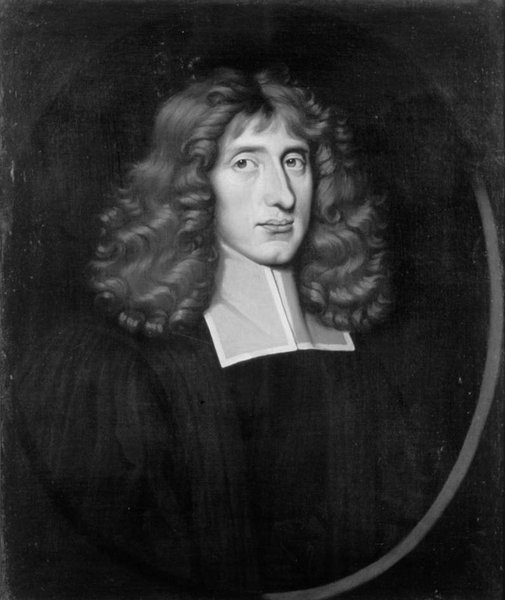
Henry Scougal lived only twenty-eight years, held no office grander than a professor’s chair in a small northern university, and left behind one short book that began life as a private letter. He never led a movement or, so far as anyone knows, preached to a crowd. Yet a century after his death, young men at Oxford were passing his letter from hand to hand, and one of them would say it taught him for the first time what true religion was. Scougal’s life is thinly documented, and an honest account of him has to admit how much is simply not known. But what is known is enough to show a quiet, scholarly, prayerful young man who understood the heart of Christianity with unusual clarity, and wrote it down for a friend.
A bishop’s son in Aberdeen
He was born in June 1650, probably at Leuchars in Fife, the second son of Patrick Scougal and his wife Margaret Wemys. His father was a minister of the Church of Scotland who later became Bishop of Aberdeen. In the years after 1661 the Church of Scotland was governed by bishops, and the country was bitterly divided between those who accepted that order and the Covenanters who resisted it. Henry grew up a bishop’s son in an age of fierce church quarrels. His younger brother James would later sit as a judge under the title Lord Whitehill.
The few accounts of his boyhood agree on one thing: he was a serious child, raised from his infancy in religion, who spent his free hours not in games but in reading, meditation and prayer. He loved the historical books of the Old Testament in particular. The sources are too thin to bear much embroidery, but it fits everything that comes after. The boy who sat with the stories of Israel became the man who could write about the inward life of God with the ease of someone describing his own home.
A young professor at King’s College
In 1665, at about fifteen, he entered King’s College in Aberdeen, and he graduated Master of Arts in 1668. He was clearly gifted. Soon after graduating he was made a teacher of philosophy in the college, one of the regents who in Scottish universities of the time took a class of students through their whole course. He is said to have known Latin and Hebrew well, along with some other Eastern languages.
Then, in his early twenties, he stepped out of the university for a season. In 1672 or 1673 (the records differ) he was ordained and became minister of Auchterless, a country parish some twenty miles from Aberdeen. He stayed only about a year. He was called back to King’s College to become Professor of Divinity, the chair responsible for training the ministers of the north of Scotland, and he held it for the rest of his short life, from around 1674 until his death. His Latin treatise on the proper object of religious worship, De Objecto Cultus Religiosi, was printed at Aberdeen in 1674.
How he spent his days, what his students thought of him, how he stood in the controversies around him: none of this has come down to us in a form that can be trusted. What survives is his writing, sermons, essays and meditations published long after his death, and above all the letter that made his name.
A letter to a friend
The Life of God in the Soul of Man was written to a friend who had asked for spiritual counsel. The friend is never named, and no reliable source identifies him. He writes as to “my dear friend” throughout, apologising for his length and pausing at the end of each part to pray. It is a pastor’s answer to a single question: what is real religion, and how can anyone come to have it?
He begins by clearing away counterfeits. Some people, he says, place religion in correct opinions, and can tell you only which party they belong to among “those many sects whereinto Christendom is most unhappily divided.” Others place it in outward duties: going to church, keeping a sober diet, giving a little to the poor. Others place it in feelings, in rapturous hearts and melting devotion. All of these, he grants, may be means to religion or parts of it. None of them is the thing itself. Then he gives his own definition, the sentence for which he is remembered:
They know by experience that true religion is a union of the soul with God, a real participation of the divine nature, the very image of God drawn upon the soul, or, in the apostle’s phrase, “It is Christ formed within us.”
— Henry Scougal, The Life of God in the Soul of Man, Part I
Religion, for Scougal, is a life. It is not a sudden fit of feeling that flares and fades, but a steady inward principle, as natural to the renewed soul as breathing. He calls it divine because it comes from God, worked in the soul by the Holy Spirit, and because it makes the soul resemble God. Its root is faith, and its branches are four: love to God, charity to all people, purity, and humility. He then turns to Christ as the perfect pattern of all four: his nights of prayer, his meekness toward Judas, his humility in refusing to be made a king. The Christian life, as Scougal draws it, is the life of Jesus reproduced in ordinary men and women.
In the second part he sets out why such a life is worth wanting. His most searching passage is about love, which he believed shapes a person into the likeness of whatever is loved:
The worth and excellency of a soul is to be measured by the object of its love.
— Henry Scougal, The Life of God in the Soul of Man, Part II
Love placed on any creature, he argues, will always disappoint: the beloved is too small to fill the heart, may not love us back, may be taken from us. Love placed on God meets none of these griefs. The man who has given his heart to God can find, as Scougal puts it, that the darkest prison or the wildest desert becomes not only bearable but delightful, because the one he loves is never absent.
The means of grace
Scougal knew that a description of the divine life could leave a reader in despair, and the third part of his letter is written for exactly that reader, the one who sees the goal and says, “I am quite of another constitution”. He answers with encouragement rather than reproach. Holiness is the work of God, he insists, yet we must not “lie loitering in the ditch, and wait till Omnipotence pull us from thence.” He sets out plain, practical means: to stop doing what we know to be wrong; to review each day before sleep, an old practice he admits he learned from a pagan writer; to think long and seriously about the truths of the faith until they move the heart; to make use of the Lord’s Supper. And above all, to pray.
In prayer we make the nearest approaches to God, and lie open to the influences of heaven; then it is that the Sun of Righteousness doth visit us with his directest rays, and dissipateth our darkness, and imprinteth his image on our souls.
— Henry Scougal, The Life of God in the Soul of Man, Part III
He distinguishes three kinds of prayer: prayer spoken aloud, prayer formed silently in words within the mind, and a third, deeper kind, in which the soul, after long meditation, reaches toward God “in sighs and groans, and thoughts too big for expression.” This inward prayer he calls “the great secret of devotion,” though he does not despise the simpler kinds, and admits that the deepest prayer is tiring and cannot be kept up for long.
An early death
Scougal’s letter reached print in London in 1677, without his name on it. Gilbert Burnet, a Scottish clergyman then in London who would later become Bishop of Salisbury, saw it through the press and wrote its preface; one account says this was done with the author’s consent. Scougal did not have long to see what became of it. He fell ill with consumption, the old name for tuberculosis, and died at Aberdeen in June 1678, at about twenty-eight. Even the day is uncertain: different sources give the 13th, the 16th, or the 20th. He was buried in the chapel of King’s College, and his colleague George Garden preached his funeral sermon.
No deathbed story survives. His book had already said what he had to say about death: that the soul is “a divine spark, capable to know, and love, and enjoy our Maker”, and that though it is now weighed down by the body, it can live without it “as well as that can do without the clothes which we throw off at our pleasure.” A young man dying of a wasting disease had written those words a year or two before.
A book that kept travelling
The letter outlived its author by centuries. It went through edition after edition in Scotland and England, was translated into French in 1727, and became a quiet favourite among readers who cared more for the heart of faith than its quarrels. Its most famous reader came more than half a century after Scougal’s death. At Oxford in the 1730s, John and Charles Wesley gathered a small group of earnest students, mocked by others as the Holy Club, and Scougal’s book circulated among them. A copy came into the hands of a poor young servitor named George Whitefield; Charles Wesley is usually named as the friend who gave it to him. Whitefield later said that he had never known what true religion was until he read that treatise. He went on to become one of the great preachers of the evangelical revival in Britain and the Great Awakening in America.
It is a striking chain: a private letter from Aberdeen awakens a young man three generations later, and through him reaches crowds on two continents. Scougal belonged to the episcopal side of a divided Scottish church; Whitefield was a Calvinist field-preacher; the Wesleys were Arminian Anglicans. All of them found in this little book the same thing, because Scougal had written it beneath the level where those arguments happen.
Why read him now
The Life of God in the Soul of Man is short enough to read in an evening and deep enough to return to for years. Its English is that of the seventeenth century, but its argument is plain and its warmth unmistakable. It is worth reading because it asks the question every believer eventually has to face, whether faith has become merely opinion, habit, or feeling, and answers it not with a scolding but with a picture of what God can do in a soul: the life of Christ himself, formed within.
Henry Scougal did not live to be thirty, and we know frustratingly little about him. But he left exactly what a good pastor would want to leave: a letter to a friend that still speaks to strangers, telling them that religion is not a performance but a union with God, and inviting them, as he invited his friend, to pray for it.
Questions and Answers
Who was Henry Scougal?
Henry Scougal (1650–1678) was a Scottish minister and theologian who taught at King’s College, Aberdeen, and served as its Professor of Divinity. He is remembered for one short book, The Life of God in the Soul of Man, written as a letter of spiritual counsel to a friend.
Where was Henry Scougal born, and who were his parents?
He was born in June 1650, probably at Leuchars in Fife, the second son of Patrick Scougal and Margaret Wemys. His father later became Bishop of Aberdeen, at a time when the Church of Scotland was governed by bishops, and his younger brother James became a judge as Lord Whitehill.
What was Henry Scougal like as a boy?
The accounts of his youth describe a serious child, raised in religion from infancy, who spent his free hours in reading, meditation and prayer. He especially loved the historical books of the Old Testament.
Where did Henry Scougal study and teach?
He entered King’s College, Aberdeen, in 1665 and graduated Master of Arts in 1668, after which he taught philosophy there. He was known as a fine linguist, with Latin, Hebrew and some other Eastern languages.
Was Henry Scougal ever a parish minister?
Yes, briefly. In 1672 or 1673 (the records differ) he was ordained and became minister of Auchterless, a parish about twenty miles from Aberdeen, and served there for roughly a year. He then returned to King’s College as Professor of Divinity, which he remained until his death.
What is The Life of God in the Soul of Man about?
It is a long letter to an unnamed friend explaining what true religion is and how to attain it. Scougal sets aside religion as mere opinion, outward duty or feeling, and describes it instead as a divine life in the soul, rooted in faith and growing in love to God, charity to all, purity and humility, with Christ as its pattern and prayer as one of its chief means.
How did Henry Scougal define true religion?
He wrote that true religion is “a union of the soul with God, a real participation of the divine nature, the very image of God drawn upon the soul,” or, in the apostle’s phrase, Christ formed within us. He called it a divine life because it comes from God and makes the soul resemble him.
How was the book first published?
It was printed in London in 1677 without Scougal’s name, with a preface by Gilbert Burnet, the Scottish clergyman who later became Bishop of Salisbury. It went through many later editions and was translated into French in 1727.
How and when did Henry Scougal die?
He died of consumption, or tuberculosis, at Aberdeen in June 1678, at about twenty-eight; sources give the day variously as the 13th, 16th or 20th. He was buried in the chapel of King’s College, and his colleague George Garden preached his funeral sermon.
How did Scougal’s book influence the Wesleys and George Whitefield?
The book circulated among John and Charles Wesley’s Holy Club at Oxford in the 1730s, and a copy reached the young George Whitefield, usually said to have been given him by Charles Wesley. Whitefield later said he had never known what true religion was until he read it, and went on to become a leading preacher of the evangelical revival in Britain and the Great Awakening in America.