Chapter 16 · 7 min read · 9 min listen
1 Corinthians 15
In this chapter
Paul hands on the gospel he received: Jesus died for our sins, was buried, was raised on the third day and appeared to many. If the dead are not raised, faith is futile, but Jesus is the firstfruits; the dead will be raised with a new body, and death is swallowed up in victory.
The resurrection of Christ
1Brothers and sisters, I am setting out for you once more the gospel I proclaimed to you. You received it, you stand firm in it, 2and through it you are being saved, if you keep hold of the message as I proclaimed it to you. Otherwise you came to believe for nothing.
3What I handed on to you, as the first and chief thing, I myself had received: that Christ died for our sins, in keeping with the Scriptures; 4that he was buried; that he has been raised on the third day, in keeping with the Scriptures; 5and that he appeared to Cephas, and after that to the Twelve. 6Next he appeared to more than 500 brothers and sisters on a single occasion. Most of them are alive to this day, but some have died. 7Then he appeared to James, and after him to all the apostles. 8Last of all, as though to a child born before its time, he appeared to me as well. 9Among the apostles I am the least; I am not even fit to bear the name apostle, because I persecuted God’s church. 10It is God’s grace that has made me what I am, and his grace to me was not wasted. Instead, I have toiled harder than all of them, though it was not I but God’s grace working with me. 11In any case, whether it came from me or from them, this is the message we all proclaim, and this is the message you believed.
If the dead are not raised
12Now if what we proclaim about Christ is that he has been raised from the dead, how can some among you be saying there is no such thing as a resurrection of the dead? 13If there is no resurrection of the dead, then Christ has not been raised either. 14And if Christ has not been raised, then what we proclaim is empty, and your faith is empty too. 15Worse, we turn out to be giving false evidence about God, since we have borne witness against God by saying he raised Christ, when he did not raise him, if it is really so that the dead are not raised. 16For if dead people are not raised, neither has Christ been raised. 17But if Christ has not been raised, your faith is worthless, and you are still in your sins. 18It would also mean that those who have died in Christ have perished. 19If our hope in Christ reaches no further than this life, no one is more to be pitied than we are.
The firstfruits of those who have died
20But as it is, Christ has been raised from the dead: he is the firstfruits of those who have died. 21For since death came by way of a human being, the resurrection of the dead also comes by way of a human being. 22Just as all who belong to Adam die, so all who belong to Christ will be brought to life. 23But each has a set place in the sequence: first Christ, the firstfruits; after that, at his coming, the people who are his. 24After that comes the end, when he hands the kingdom over to God the Father, once he has put an end to every ruler, every authority and every power. 25For his reign must continue until he has placed all his enemies beneath his feet. 26The last enemy to be done away with is death. 27For “he has placed everything in subjection beneath his feet.” Now when Scripture says that all things have been placed in subjection, it is obvious that this does not include the one who placed all things in subjection to him. 28And once all things have been made subject to him, the Son himself will then be made subject to the one who made all things subject to him, so that God may be all in all.
29Otherwise, what will those who are baptized on behalf of the dead accomplish? If the dead are not raised at all, what is the point of being baptized for them? 30And why do we ourselves put our lives at risk hour after hour? 31I die every day. I swear it by how proud I am of you in Christ Jesus our Lord. 32If my fight with wild beasts in Ephesus was only for this life’s sake, what good has it done me? If the dead are not raised, then “Let us eat and drink, since tomorrow we die.” 33Make no mistake: “Good character is ruined by bad company.” 34Sober up, as you should, and stop sinning. There are some who do not know God at all. I say this to shame you.
The resurrection body
35But someone will object, “How are dead people raised? And what sort of body will they have when they come back?” 36How foolish! A seed you sow does not come alive unless it dies. 37When you sow, you are not sowing the body that will grow, but a bare seed, perhaps of wheat or of some other grain. 38God gives it the body he has chosen, and gives each kind of seed a body of its own. 39Flesh is not all of one kind. Human flesh is one thing, the flesh of animals another, the flesh of birds another, and that of fish another. 40Some bodies belong to the heavens and some to the earth, and the glory of those in the heavens differs from the glory of those on earth. 41The sun has its own glory, the moon another, the stars another; and even among the stars, each has a glory that is different.
42It is the same with the resurrection of the dead. It is sown in decay; it is raised imperishable. 43In dishonor it is sown, in glory it is raised; in weakness it is sown, in power it is raised. 44What is sown is a natural body; what is raised is a spiritual body.
If a natural body exists, a spiritual body exists too. 45This is also what Scripture says: “Adam, the first man, became a living being.” The last Adam became a spirit who gives life. 46The spiritual does not come first. The natural comes first, and the spiritual after it. 47The first man came from the earth and was made of dust; the second man comes from heaven. 48Everyone made of dust is like the man made of dust, and everyone who belongs to heaven is like the man from heaven. 49Just as we have worn the likeness of the man made of dust, so we will wear the likeness of the man from heaven.
Victory over death
50What I mean, brothers and sisters, is this: flesh and blood cannot inherit the kingdom of God, and what decays cannot inherit what never decays. 51Listen, I am telling you a mystery. Not all of us will die, but all of us will be changed, 52in an instant, in the blink of an eye, when the last trumpet sounds. For the trumpet will sound, and the dead will be raised, never again to decay, and we who are alive will be changed. 53This perishable body has to put on imperishability like a garment, and this mortal body has to put on immortality. 54When this perishable body has put on imperishability and this mortal body has put on immortality, then the words written in Scripture will come true: “Death has been swallowed up in victory.” 55Death, where is your victory? Death, where is your sting? 56Death’s sting is sin, and what gives sin its power is the law. 57But thanks be to God, for through our Lord Jesus Christ he gives us the victory.
58So then, my dear brothers and sisters, be firm and unshakable, always doing more and more in the work of the Lord, since you know that in the Lord your hard work is never wasted.
Treated in 247 passages across the library.
Most quoted in the classics
Sermons on this chapter
One Word—"Gospel"
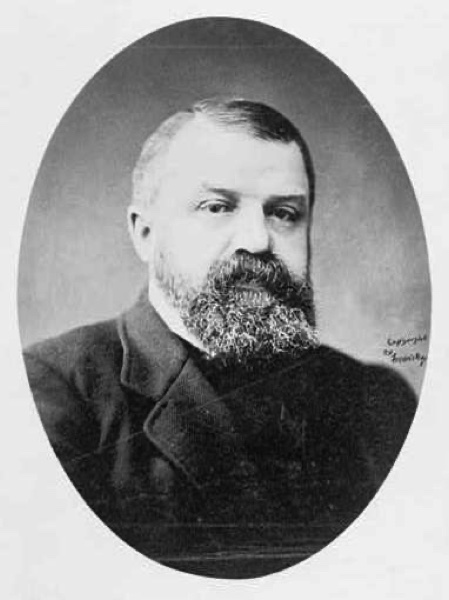
Moody takes a single word for his text — “gospel” — and grieves how little it is understood in a land that hears it hourly. He unfolds its plain meaning, good tidings, and its content in Paul’s summary: Christ died for our sins, was buried, and rose again. Good news is not good advice, he insists; it is something already done, to be received rather than achieved, and glad tidings only to those who know they are lost.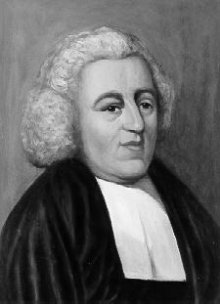
The Lord Is Risen Indeed
Newton sets the resurrection beside human depravity and the Atonement as truths the gospel cannot do without, then weighs the witnesses: they were competent judges, too many and too slow to believe to be deceived, and upright men who gained nothing but suffering by their report. The surest proof, he says, is a changed life, and he ends by urging that a belief this weighty be lived, and that those who love Christ rejoice in him.Victory over Death
Death’s sharpest sting, Robertson argues, is not the loss of being, the parting from all we love or the loneliness of dying, but sin, chiefly a guilty heart, made strong by a law that can only restrain. Unbelief, nerve and necessity can all face death calmly; the Christian’s victory through Christ is over doubt and fear, and at last in the resurrection. He ends by bidding the timid look to God’s love in the Cross, because the victory is already given.Cross-references from OpenBible.info, CC BY