Text
Acts 20:17-32
In brief
Preaching from Acts 20 and Paul's letters to Timothy, Gareth Evans recounts his own conversion as a teenager in Wales and traces what it means to guard the paratheke — the treasure of the gospel entrusted to every believer. He presses hard on repentance as the door into the riches Paul describes in Ephesians, and closes with stories from the streets of Victoria, urging the church to trade lukewarm entertainment for a costly, disciplined pursuit of Christ.
Father in heaven, we thank you for the gift, the beautiful gift it is that you sent Gareth here. You brought him here, and I ask, Lord, that your spirit would just continue to be upon him, that you would put into his heart and his mind the things that you have prepared for him and for us to hear. Lord, open our hearts, prepare us to receive from you a message. We ask these things, believing in Jesus' name. Amen. Amen.
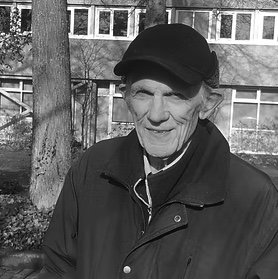
Good evening. Whatever he has told you about me, all the good things are true. Don't believe the rest. Can you hear me clearly, everybody? Oh, good. Appearances can be deceptive. I look like an 87-year-old man, but my mind is that of a 60-year-old man. My heart is that of a 25-year-old young man, but my arthritis tells me I'm 102. So I have a chair here, because if I find standing too difficult, I will sit down, if that's okay. But I'm excited to be here. I brought my friend James, my close, dear friend, with me, and we're looking forward to a wonderful weekend.
I trust you are. I was a schoolteacher for many years, and when I ask a question, I expect answers, okay? So please, please hear me. If you want me to stop anywhere and you've got a question, please do so, all right? I'm very at ease with that. I was a schoolteacher for 20 years.
What Will You Do With the Lord Jesus Christ?
Let me go back. I came to the Lord when I was 16 years of age in Wales, my home country, through a lady who had asked me a question that I could not answer. She simply said these words: tell me, Gareth, what will you do with the Lord Jesus Christ? I didn't know what she meant. I knew the Bible. I'd been to Sunday school as a little boy, but I lost my mother when I was 13, and I hadn't gone to church after that. Still, I believed in life after death. I played a lot of soccer, and if I scored a goal, I always said, Mom, I hope you were pleased. She never answered me, but I talked to her.
I believed. And then this woman says to me, tell me, Gareth, what will you do with the Lord Jesus Christ? I didn't know how to answer, because he died 2,000 years ago, what could I do with him? The next week I went into this little home where she was holding her meetings, and she asked me the same question. I still didn't know the answer. So each week she'd say, I want to talk with you, and I knew exactly what it was for, and I said, no way. I hid, I didn't go into the kitchen where she was. For about five weeks I avoided the question. But over those five weeks I came to realize the whole crux of Christianity is this: that Jesus is alive, just like my mother is alive, I believed. And if I could talk to my mother, then surely I could talk to Jesus.
Then one of the boys in our group said that next Sunday his brother was going to be speaking at the little church in the village, a church of about 15 people, and why didn't we all go and swell the congregation for him? So that Sunday I put on my best clothes and went to church for the first time since my mother had died. The speaker was a prefect in the boys' school where I attended. He knew me, I knew him, we were four or five years apart. At the end of the service, Austin and I started talking.
He asked me what I was doing with my life, and I said, I'm doing my A-levels. He said, what subjects? I said, math and physics. He said, what then? I said, well, I hope to go to university. He said, what then? I said, well, I'd like to become a schoolteacher. He said, what then? I said, I don't know. He said, tell me, Gareth, what will you do with the Lord Jesus Christ? Exactly the same question, word for word.
Hasn't God got a strange way of doing this? I went home that night to my empty house, my sister was out, my father was out. I knelt by my bed, and I said words like this: Jesus, if you can hear me right now, would you please come into my heart? Forgive me my sin. And I sang a little chorus: into my heart, into my heart, come into my heart, Lord Jesus; come in today, come in to stay, come into my heart, Lord Jesus. I meant it. Amen. Nothing happened. I got up off my knees.
I didn't feel any different, but I meant that prayer sincerely, a 16-year-old boy. I went to school the next day, and in this boys' grammar school I attended, about 300 boys, you have a little group. It wasn't a gang, but they were my close friends. I wasn't the best rugby player. I wasn't the best academically. I didn't have the prettiest girlfriend. I wasn't the best at anything, except at telling dirty stories. I had a vivid. I was going to say a good imagination, but a bad imagination. I could tell the best dirty stories.
I knew if I was a Christian, I couldn't tell my dirty stories anymore. So when a friend comes up to me and says, hey, God, have you heard this one, and starts to tell me a dirty story, I move away and say, I need to talk with Peter, but at the same time, I want to hear the punchline. That's an awful place to be. The second day the same thing happened, and I'm going quieter and quieter, and my friends are beginning to see something's different with me. By Wednesday I felt so miserable, because my friends didn't quite know how to talk to me, and I did not know how to talk to them. Wednesday night I said, God, I can't go on like this. I'm so miserable.
Is this what being a Christian is all about? I'm so miserable. I went to school the next morning, and one of my friends comes up to me and says, hey, God, is that right what I've heard about you? They were in a boys' school, if they'd heard something about you, some girl had been talking. So I said, what have you heard about me? Have you been going to that house with that religious woman? And I said, yeah. And I said, uh-oh, they'd found out. Have you got saved? Yes. Hey, fellas, that's what's wrong with them.
He's got religion, hey, say a prayer for me, can I kiss the ring on your finger, they started making fun of me. You have to understand, any boy growing up in Wales, we live next door to big England, 60 million people; we are 2 million people, every little Welsh boy grows up with an inferiority complex. It's part of our nature, and when a boy has an inferiority complex, he tends to talk a lot and boast a lot and show off a lot. That's our character. That's my character.
And my friends were making fun of me, and I wanted a hole to open up in the ground and swallow me. And the bell rang for us to go into assembly. I followed my friends in, and as I walked through that door, suddenly I knew that I knew I was a child of God. I didn't have any flashing lights, I didn't have goosebumpy feelings, but I knew, deep within my soul, that I was born of God. I knew.
From that day to this, I have never had a question of doubt that God did a work in me that night, my sincerity, and my little boy's simple words, come into my heart, Lord Jesus, come and stay. The first thing that I was taught as a Christian was: you stop playing. You do not drink alcohol. You do not smoke. You do not go to dances. You do not keep company with people who do those things. These were the scribal laws I was told. And the fifth one: you do not play soccer.
Well, I was very keen on soccer, you see, and in Britain soccer was associated with the football pools, gambling. Viv, the man of the house, the woman's husband, played soccer for the local team, and he had disobeyed God, because God had convicted him about playing soccer. He'd fallen over in the game and broken his little finger, and God had judged him and given him sugar diabetes, because he was so disobedient to God. That's what I was taught, the very first things I was taught as a new Christian. I loved that couple.
A Fire in the Belly
I loved that couple very, very much, but that was the legalism I was taught. I thank God I was a radical. I didn't smoke, I didn't drink, I didn't go to dances, but I sure played soccer. I was, from the very beginning, outside the box. And then, to their horror, I started attending a local church in a local town, a Pentecostal church.
Oh my goodness, that was the worst thing I could possibly do, but I loved that couple, and they loved me, because God had obviously done a good work. I grew up in that kind of culture, but I was radically different. I wanted reality. I did not want fakery. I wanted something real. I had met God in a real way, that day I walked into the school assembly, I knew that he was real.
My first pastor's father came to Christ during the Welsh revival, and Wynne Lewis, the son, my pastor, had a fire in his belly. He had flat feet and a fire in his belly. And his kind of passion was this: you ship up, or you ship out. I'm not interested in you being part of my church if you're not going to follow Jesus fully. I don't want any half-hearted people in my church. That was his message. I'll give you an example. One day he says to us, we're going to Cairo on Saturday night, up the valleys from our little town where we lived in Wales.
We're going to Cairo Saturday night, and Mel, you're going to sing a solo, and Gareth, you're giving your testimony. I said, well, pastor, I'm sorry, but we're playing away, we're playing a game away in the league on Saturday. I won't be able to get there. He said, you'll be there, or else. I was there, in my football kit, giving my testimony. That was my pastor. I thank God for a man like that, who took hold of me as a young believer by the scruff of the neck and said, you're going to ship up. I don't want you in this church if you're going to play games with God. I thank God that man stacked the wood in me that the Holy Spirit lit, and set a fire. I got a fire burning in my belly. It has never gone out.
I look back at those days with Wynne Lewis, my first pastor, and I want to see a fire lit in people's bellies, you understand the crudity? I was with a senior pastor in Victoria, oh, six, eight years ago. He was the leader of a ministerium, and Bruce and I were walking. Bruce said, Gareth, I love being with you, you've got a fire in your belly. My reply. I know it's a compliment, but my reply was, why doesn't everyone else? Why doesn't everyone else? My passion in traveling. I've traveled and spoken at many conferences, I speak at a lot of youth conferences. I want to see people getting enamored with Jesus. I want to see people set on fire by Jesus, loving him with a passion. That's my burden. That's my calling.
I came to Canada in 1975. I was a teacher. I came to teach physics. I'd taught in Britain, I'd taught in Germany with the British forces, I'd taught in Hong Kong, and then with the joy of coming to Canada in 1975 I taught in Toronto. I was teaching at the Hebrew Academy in Toronto, the only non-Jew on a staff of about 40 teachers in a very Orthodox Jewish school. Miracles. I could tell you more stories about that. I was a schoolteacher, but I started attending a Christian and Missionary Alliance church. We don't have that in Britain, but I'd been in Hong Kong and worked with missionaries who were with the Alliance, and so our first week in Canada we drove into People's Church.
You may have heard of People's Church in Toronto. Oswald Smith, a very famous church, and we were a bit late, and on the way my wife says, look, there's an Alliance church, why don't we go in there, it's the same as these missionaries. So we went into this Alliance church, and we enjoyed it. We enjoyed the pastor and his family, and we felt at home there.
I'm teaching at the Hebrew school when the district superintendent asked me if I would consider becoming a pastor. I said, pastor, I can think of no greater honor than to be a pastor, but there's no way I'd become a pastor unless I knew God had called me, there are too many men in the pulpit who are called pastors but do not display the giftings of a pastor. They're good men, you understand. I'm not saying bad men, but good men. He said, what are you waiting for, a flash of light from heaven? I said, yeah. He said, all I want, Gareth, is the witness of the brethren. Then I said to him, but Mel, I can't afford to go to seminary. I've got three teenage daughters, I'm earning big money right now, but I haven't got savings. He said, I want you as you are.
To cut a long story short, for the next eight months I'm agonizing with God about this call. I was the highest-paid teacher in Canada at the Hebrew school, other than the headmasters. Hebrew school paid way above the odds. I was earning 33,000 when other teachers were getting 28,000. And here I am, considering giving it up to become a half-paid pastor on a half salary and a half pension. You don't do that lightly. The last thing my wife wanted was to be married to a pastor, her father was an itinerant evangelist, and they lived as paupers while he was in Norway.
Finally, after eight years, I said to my wife, Anne, I think God is calling me into the ministry. And my wife, being a godly woman, always said these words: if God is calling you, you better obey. She didn't say she wanted it, but she meant it, she didn't want to be a pastor's wife. And I left the Hebrew school to become a pastor with the Christian and Missionary Alliance.
My very first day in the church in Kitchener, the very first day, a woman comes up to me with a book. Pastor, can you put this back in the church library, which is in my office? A little church of 40 young people. I said, what's it about? She said, it's called Wingspread, written by Tozer. Now, I'd heard of Tozer. I said, what's it about? She said, A.B. Simpson. I said, who's he? She said, he was the founder of the Christian and Missionary Alliance. I'm a pastor with the Christian and Missionary Alliance, and I do not even know the name of the founder. So I bluffed my way through it. I said, oh, I knew that, of course. I took the book home and said, I'd better read this.
And my heart sang as I read this book, because it was everything I believed. I knew I was in the right place. But I made the foolish assumption that every other Alliance pastor believed the same. To my amazement, as time went on, I discovered many of them didn't even believe what the denomination believed. It's called historical drift. John Wesley, if he came back today, would he recognize the Wesleyan Methodist Church? His heart would bleed. Historical drift is a common phenomenon in all churches.
Guard That Which Has Been Entrusted to You
Let me talk about Paul. Paul is a great, great evangelist, a preacher who travels the world, his world, proclaiming the gospel; in the book of Acts we read how he establishes churches in many places. He comes to the city of Ephesus, and there he proclaims the gospel, preaches the word, and finds ten believers already there, maybe converted where they'd been in Jerusalem, maybe at Pentecost, or maybe when Jesus was crucified. He found ten believers there, and he nurtured them and built a church. He stayed there for two years as their pastor. And in Acts chapter 20 we read about his time with them, how he was faithful in preaching the word. Let me look at that with you.
Verse 17: he goes, he comes back, and he's in Miletus, and he calls the elders of the church to come to see him. He doesn't get back to Ephesus, but he calls them down to him.
You know from the first day that I was with you in Asia, how I was with you, serving the Lord with all humility, with tears, with trials which came upon me through the plots of the Jews, how I did not shrink from declaring to you everything that was profitable, teaching you publicly from household, solemnly testifying to both Jews and Greeks of repentance towards God and of faith in our Lord Jesus Christ. And now I'm on my way to Jerusalem, bound by the spirit, not knowing what is going to happen to me, except that the Holy Spirit testifies to me that I will have bonds and affliction await me. I do not consider my life of any account as dear to myself, that I may finish the course and the ministry which I received from the Lord, to testify solemnly the gospel of the grace of God.
And then he goes on to say this to the people there: be on guard, be on guard for the things I taught you, guard them. Then he leaves them at Miletus and journeys on, and he sends his young boy, whom he's mentoring, called Timothy, he tells him to stay on at Ephesus to be the pastor of the church.
He sends him back with the elders. Then Paul goes on, and he ends up in prison, and from prison he writes a number of letters, two of which are to Timothy in Ephesus. And he says to Timothy, guard that which has been entrusted to you. The theme of this conference is that: in 1 Timothy, 2 Timothy chapter 1, guard that which has been entrusted to you. And my question this evening is, what has been entrusted to Timothy? The message that Paul proclaimed, the truth that Paul proclaimed. He said to the elders at Miletus, there are going to be ravenous wolves coming in who are going to try to tear away that which I taught, so Timothy, I want you to guard it. Just as I've entrusted my life to God, he has entrusted to me a ministry.
Timothy, I'm charging you to guard that which God has entrusted to you. The theme of these three days is: what has God entrusted to us? Tonight I want to speak about the message, what message has God entrusted to us as his children, his church? I'm not just talking to pastors and teachers and elders, I'm talking to all of us.
What is the message? Tomorrow night we're going to be speaking about the giftings that every one of you has received from the Holy Spirit, and on Sunday, Pentecost Sunday, I want to talk about guarding the fire, the anointing of God. Tonight, let's deal with the message. What is the message that we are called to preach? John the Baptist went around proclaiming, repent, for the kingdom of God is at hand. Jesus, we read, went around preaching, repent, for the kingdom of God is at hand. He sent his disciples out with the same message: repent, for the kingdom of God is at hand.
What do you mean by that? We are offering our churches today community. We are offering them wholesome entertainment. We are offering them good self-image. We are offering them a utilitarian God who exists to bless us, and we're offering them an unrealistic hope of a future life. Well, it is my sad experience that many of our churches will never even come to the place of repentance and new birth.
I had the privilege of moderating some conferences with Sermon Index. I don't know if you've heard of Sermon Index, the webpage. It was started by a young man called Greg Gordon, in Toronto; he now lives in BC. He started it with sermons by an American preacher, his name slips me at the moment, and he put many, many sermons up. There are now tens of thousands of sermons you can listen to online. I was listening to a number of them, and I was very blessed, except they were so numerous, and I'd be listening along, thinking I knew where it was going, and then in the middle of the sermon the man would say, of course, the day of miracles has passed. I'd go, what? I don't want to hear this man anymore. So I wrote an email to the webpage.
I said, is it possible to put your sermons into categories, so I can find the kind I want to listen to? I got an email back the very next day: my name is Greg Gordon. When you write to a webpage, it could be anywhere in the world. He wrote, I'm coming to Victoria at the end of the month, will you mentor me? I said, yes, I would. A month later, a young man knocked on my door, six foot six, with a big black beard. I'm Greg Gordon. Cut to the chase, he started conferences on revival, and I moderated a number of them for him, in Atlanta, Georgia; in Canton, Ohio; in Glasgow, Scotland. Speakers came from all over the world, and we saw God move in a wonderful way.
But at one of those conferences, in Atlanta, Georgia, Paul Washer stood up to speak, ten indictments against the North American church. It was two hours, bar one minute, long. When I got home I said to my wife, what did you think of it? She'd been watching it live on TV, watching to see that my tie was straight and my hair was combed. I'm a moderator, after all. She said, I was riveted to the TV, I could not leave it. It was not an easy sermon to listen to. At the end of that service, a fellow moderator and I were sitting in the front row, maybe 800 people in that church in Atlanta, and Don said, Gareth, I don't know how to close.
Just sit, just sit silent. So he sat silent. Finally I got up and walked up the aisle of that large, sloping church, the only one on my feet in the entire auditorium. Near the back, a man came out of the rows, grabbed my arm, walked me out through the back door, turned left into the senior pastor's office, and took hold of my lapels. He said, Gareth, tonight you heard a prophet speak, and the church in America had better sit up and take notice. I tell you that not to condemn, but to say there is a sadness, a sickness, upon the church, so much of the church. And I trust it's not going to be this church, because we have watered down the gospel to become accommodating to people.
The Key That Opens the Blessings of God
I want to talk about repentance. A few weeks after my conversion, I'm in that little chapel in the village, maybe fifteen people there, and I'm crying, and I do not understand why. I didn't cry when my mother died, at age thirteen; I was too big, you know, you're not allowed to cry if you're a thirteen-year-old boy. I didn't cry then. But here I am crying, and I couldn't understand why. The people say, are you all right, son? Yeah, yeah, yeah, yeah. Are you sure? Yeah, yeah, I'm all right. But I didn't know why I was crying. As I was allowed to cry it through, I realized that God had given to me, as he did to the house of Cornelius, the gift of repentance. He had taken me to the cross, and I saw what my sins did to Jesus, and the only way I could respond was in tears.
What is repentance? Well, I'll give a little illustration first. The first time I met Shane, not Christie, just Shane, was in Port-au-Prince, Haiti. He was a youth pastor in the church, and I was the speaker that day, how that happened, I have no idea, but I was. When I left there to go back to the missions base I'd been visiting, maybe a hundred kilometres away, we stopped halfway to have coffee with some other missionaries. One of them, an American, had this ministry: every week he would come down to Port-au-Prince to bring out three doctors from the States, and take them to one of his thirteen villages up in the mountains, where they had no electricity or running water. They would preach the gospel and treat the people medically for whatever sicknesses they had.
Then he'd bring them back down on the Sunday, take them to the airport, and pick up three more doctors for the next village, a circuit of thirteen villages. When they finished in a village, they'd come down to an office and write up their reports for his medical records. He was there at this coffee stop as I was coming back from Port-au-Prince, and he told us a story. He said, yesterday we'd just finished at the village, and the three doctors were with me typing up their reports, when we suddenly saw there was a fire up the hill, in the village we'd just come from. So we jumped in a vehicle and went back up the mountain.
When we got there, we found the voodoo doctor, you might think of him as the mayor, the most prominent man in the village, standing by the burnt-out ruins of his home. We began to commiserate with him. And he said, no, no, no, no, no. I'd just given my heart to Jesus, so I got all my paraphernalia, put it in my house, and burnt the lot down. That is repentance. It's a new life, a new beginning. Repentance is not a negative word, it is a positive word that opens you into all the blessings of God. And I would suggest that without repentance of that kind, you cannot know the blessings of God.
We have people in our churches who come for the community. At the little church that James and I attend, we had two brothers come in six years ago. Shane and Brian, in their late twenties, good-looking young men, and they made it very clear that the reason they came to church was because they were looking for community, and they'd realized the best, safest community to be in was a church community. Brian's hobby was hiking, and I loved hiking too. In those days he did a lot more, so he and I would hike, sometimes fifteen of us, sometimes just Brian and myself, up all the hills and mountains of Vancouver Island. I would talk to Brian about the Lord, and Brian would always say, yes, it's okay for you, Gareth, but you know, I've got my life ahead of me.
He's an opera singer now, by the way, a trained opera singer, Brian. This was six years ago. I prayed for Brian all the time. He's a special guy, but he came to our church openly for community. He called me just before Christmas, living in Vancouver and doing UBC music. Gareth, I want you to be the first to know. I said, what's up, Brian? I've just given my heart to Jesus. Hallelujah. He'd taken a trip to northern BC with two cars to a wedding, and on the way back they got caught in a fire, then found a garage closed because of the fire, so many incidents on their journey home. There were two girls in those cars who were Christians, and every time they had problems, they prayed. Brian got home to his apartment in Vancouver, sat down, and said, God, I now believe. He gave his life.
But he came to our church for community, and I suspect there are others in our church like that. If you ask them, how do you know that your sins are forgiven, I suspect there may be several who could not tell you. Have you ever experienced an inner witness of the Spirit of God that you are a child of God? I suspect, because we're given easy believerism in our churches, say this prayer after me, repeat the four spiritual laws, do you know God has a wonderful purpose for your life, but God's purpose for your life is hell unless you receive Christ as your Savior. We've given them all these platitudes, easy believerism. Are we afraid of the truth, when the truth is so liberating, so gloriously freeing? Let me repeat: repentance is the key that opens up all the blessings of God. Pastors, if you're a pastor, never, ever fail to preach repentance. Bring people to the cross. Let them see their sin. Let them cry.
I was in Mexico. I lost my heart in Mexico City. I went there to a young couple with three young children; I love them dearly. They live in a two-room concrete block with no running water, no electricity, and when I went there, they gave me their bedroom, and all five of them slept in the other room. That was how much they loved me. I went out with him, and we spoke at pastors' conferences, large conferences he pulled together. But I listened to him preach, and my Spanish isn't that wonderful, and I looked at the charts he had, and I had some strange thoughts, where is he getting these thoughts from? I was lying in my bed one day, and I saw, alongside me, a pile of papers.
It was the same as the chart I'd just seen on the wall at the conference, and I picked it up. It was a cult, a sect run by an American woman in New Mexico. He'd been translating for me, and I'd thought he was simply a Christian. He is a brother, but the sect was so strange in some of its teachings.
I'm staying at the home of a pastor in Brazil, and he says to me. I don't want to give names, but a very famous American evangelist is down there, he's got all his tapes, and he wanted me to listen. I said, I never listen to him. He said, it's all you need, it's wonderful stuff. So to humor him, I listened to his tape, and the teacher, please forgive me, I don't want to give names, is teaching about the tabernacle in the Old Testament. He's got this beautiful chart, and he's made a model tabernacle in the desert down in Arizona somewhere. He starts talking about the curtains, these represent this, and these three rings, these ropes made of three strands, because three strands.
I said, where did he get that from? Where did he get that from? Then I saw them all sitting there with these beautiful binders the evangelist had produced, everybody following along, ticking off the same things, number one, it's excellent, number two, but number three, and four, and five are his own imagination, nothing to do with the Bible. I said to my Brazilian pastor, this is not biblical. Oh, yes, it is, he said. It's a tragedy what has been taught in some of our churches, and it's a tragedy within the Christian and Missionary Alliance, that the Alliance pastors don't even believe in God, the message. Timothy, there are ravenous wolves coming in who are going to rob you of the message. God, the message to me.
The Treasures of the Christian Life
This word, God, is a very interesting thing, it's paratheke, not message, but that treasure, the treasure. The Greek word is paratheke. I'm not a Greek scholar. I did study Greek and did quite well in it, but I don't claim to be a scholar, yet I often look at the Greek words, because they say so much more than the English word. A paratheke is a sacred deposit. In the time of Jesus, people didn't have banks. If you had wealth, if you had money, you didn't put it in a bank, there were no such things, so you kept it hidden somewhere in your home. But if you were going to travel, did you take it with you, or trust it to a close friend, knowing you'd get it back when you returned? That's what they did, and that was called a paratheke.
Paul says to Timothy, Timothy, God wants you to be like a paratheke. He is entrusting you with a treasure, because he wants to see this treasure come into fruition. It's his treasure, not yours, but he wants you to be the guardian, guard the treasure. Timothy, I'm charging you, guard that which has been entrusted to you, the message. Paul then wrote one of his beautiful books, Colossians, to the church at Colossae in Asia Minor, a beautiful book, in which he speaks of the supremacy of Jesus, the glory of Jesus.
He's in prison when he's writing it, he writes at the same time as the letter to Philemon, because Philemon lived in Colossae, and Onesimus, his slave, had been converted. Paul is sending him back to his master in Colossae, and he sends a letter to the Colossian church at the same time. But he's so caught up with the theme of Colossians that he decides to write another letter to send to all the churches of Asia Minor, and he tells the Colossians, you're going to get another letter coming to you from Laodicea, pass it on to those churches too. He wanted these letters to circulate through the seven churches of Asia Minor. But there isn't any letter in the Bible addressed to the Laodiceans, is there? There is, though, a letter addressed to the Ephesians, where Timothy was pastor.
Except it's a very strange letter, because there's no mention of any of the friends Paul knew in Ephesus, even though he'd been pastor there for two years. In every other letter he says, pass my greetings on to so-and-so, but in the letter to the Ephesians in your Bible, there is no personal note at all, even though Paul pastored there for two years. You see, it was not meant only for the Ephesian church, it was meant to circulate to all the churches. It is Paul's most precious letter, and because Timothy is involved with Ephesus, it's my favorite book. I want you to understand the treasures that the message has for you, as seen in the book of Ephesians.
Well, why don't we look at it together? Get out your Bible, look at the letter to the Ephesians. We're going to go very quickly through some of the blessings of the life that has been through repentance. Listen to these words.
In Him, we have redemption. Blessed be the God and Father, Lord Jesus Christ, who has blessed us with every spiritual blessing in heavenly places in Christ.
Can you give testimony today of being blessed with every spiritual blessing in Christ Jesus? This is the inheritance of the man or woman who's come through repentance. This is the doorway, the key. The whole letter is like this. Paul is so enamored with the thoughts in it that he runs on and on and on, and his scribe is trying to keep up. In this letter there are three sections so long you could not possibly say them without breathing, but in the Greek there are no commas at all. My favorite book. Have you ever heard of the book Sit, Walk, Stand, by Watchman Nee? It's ninety pages long. When I was a young youth leader in Wales, somebody gave me that book, written from prison in China. It's based on the book of Ephesians.
For this is the word Paul says to us in Ephesians: in Him, we have been seated in heavenly places. Is that the message your people in your church know, that you have been seated in heavenly places? It's one I revel in, that in Christ, God has accepted me in Him. That I'm seated in Him. In Him, I have received an inheritance. In Him, in Him, in Him. I want you to read it yourself when you get home, see how often that phrase, in Him, comes up. This is the blessing of the repentant life.
By the way. I meant to say this earlier and omitted it. That young couple in Mexico, I went to their church, and as you came in there were tissue boxes at the doorway, Kleenex, and everybody picked some up, went to the pews, and wept. Everybody. For ten minutes before the service they'd be at the pews weeping. I didn't fully understand it, but they felt the need to repent in that public act of weeping, the way the Anglican confession has it, we confess our sins as part of the service. But back to my message in Ephesians, listen to some of the riches. In Him, in Him, we have received these things. Let me read this prayer.
Think of these words, listen to this now.
In Him, after listening to the message of truth, the gospel of your salvation, having believed, you were sealed in Him with the Holy Spirit of promise, who has given us a pledge of our inheritance.
If you're sealed, you can't lose that. This is the treasure, be faithful to God with this treasure. And then come these words.
For this reason too, I have heard of your faith in the Lord Jesus Christ, which exists among you, and your love for all the saints. I do not cease giving thanks for you, and make mention of you in my prayers, that the God of our Lord Jesus Christ, the Father of glory, will give to you a spirit of wisdom and of revelation in the knowledge of Him.
I pray that God will give you wisdom and revelation in the knowledge of Him. He's not talking about this knowledge, he's talking about an intimate relationship with God. How many people in your church, including you, have an intimate relationship with God, that you know Him with such a depth that He is closer than a brother, that close to you? Or is your knowledge of God simply this? These are the treasures of the Christian life for the man, the woman, who has come through the cross, who has come through repentance, the key that opens into the blessings of being in Him: inheritance in Him, seated in Him. Paul prays now that you would have a revelation, the knowledge of Him.
Such knowledge only comes by revelation. God gives it. I had the joy of leading a man to the Lord. His name was Les Smith. Les was a quiet, strong man; he was having problems with his teenage son, and he actually confessed to me that he was afraid that one day he might lose his temper and injure his boy.
As we talked in my church office, he wept, and we prayed together, and he gave his life to Christ. He said, Pastor, would you come to my home, please? I've got so many questions to ask you. I said, sure, Les. So on a Saturday morning my wife and I went to his home, his wife, Anne, and my wife, Anne, and they'd invited others, and there were fourteen of us sitting in his living room. I'm sitting in the lazy boy chair, do you have lazy boy chairs here?, feet up, I'm the guru.
Les was across from me, and I'm answering his questions. Then Les says, Pastor, please teach me how to pray. I said, well, Les, prayer is simply talking to the Lord and listening to Him talk to you. Do you believe the Lord is here tonight? They all nodded, fourteen of them, or thirteen plus me. I said, where is he? I can't see him. They said, well, he's a spirit. Okay, I said, so let's imagine that he, the Spirit, is sitting right here. And I pulled a dining room chair up alongside me, didn't plan it this way, but it turned out I was actually closed into the circle. Then I laughed. They said, did you see what I just did? It hadn't crossed my mind, but I'd kicked the lazy boy footrest down when I pulled the chair in, because there's no way I could be lounging there if the King of Kings is sitting right next to me.
They said, what would you do if the queen walked in here today? Somebody said, well, we'd all stand. I said, yeah, you'd all stand very quietly, very reverently, you wouldn't speak out of turn unless she spoke to you. I said, we're far greater than the queen here, the King of Kings is here. He's sitting right there. Am I making up fanciful stories, or is that the promise of Jesus, where I am, where two or three are gathered? Do you believe that? I do.
I said, let's just sit right here, prayer is talking to Him. I turned to the chair and said, Lord Jesus, I want to thank you so much for being there tonight with us. I want to thank you for dying on the cross for me, Lord, and for making me your child. I'm going to tell you, I love you, Lord. I said, let's talk to the Lord. And Les looked at the chair and said, Lord Jesus, a week ago I didn't know you as my Savior, but now you've come into my heart and into my home. Oh, no, no, no, no, this isn't my home anymore, this is your home, Lord. I never taught him that. Brand new Christian.
Then his wife talked to the chair. Then my wife talked to the chair. Then Jenna talked to the chair. We went around the room, and about halfway around those fourteen people, I could feel the hair on the back of my neck going up, something was being birthed in that room. It came around to Gordon, the last one, and he whispered to the chair. And every single one of them, fourteen people, had tears running down their faces onto their chins, they weren't even wiping them away. I said, you know what's happened, don't you? The Lord is here. Oh, no, no, no, I said, he's been there all the time, but he's made his presence known.
The following Sunday in our church, we were having worship time, and people were invited to pray. Les got up and prayed a beautiful prayer, because he knew whom he was talking to. When was the last time you were in church and you walked in and knew. God was here?
Is God here with us tonight? Is your heart such that he would make his presence known to you? Because he wants to. This is Paul's prayer for you, as it was for the Ephesian church, these are the treasures we have: I pray that the God and Father of our Lord Jesus Christ will grant you wisdom and revelation in the knowledge of himself. Not the knowledge here, but the knowledge here. I've experienced that a number of times, oh boy, I wish it were continuous. But every time I hunger and hunger and hunger, I've heard an audible voice three times. Please, please, please, this doesn't make me stupid. I know people.
I was working on a ship in Africa. I was the pastor of the ship, a spiritual leader. I was in Cardiff, Wales, doing the advance work for the ship; it was due to come in in three weeks' time. I'm walking back across the gardens in Cardiff, a beautiful park, seven o'clock in the evening, dusk, a beautiful evening. There's a lot of litter lying around. I pick some up to put it in the garbage bin, and I look at it, and it's pornography. And I felt so dirty, that had been my bane when I was a non-Christian, and I felt so dirty.
I put it in the garbage bin and sat on the bench and started to cry. I'm a pastor. I've spoken in huge churches by this time, I'm known throughout Europe, I'm known in Africa, but I'm dirty. I began to cry. And I heard the Lord speak. He said, do you think I love you any less now than I did before you picked that paper up? I said, no, Lord, I know you love me. I love you. I made you the way you are, and I'm pleased with what I made. And I began to worship him.
In my tears, I raised my arms and began to worship him. And I learned right then that whenever that arrow of evil comes in, I immediately turn it into praise. I tell you, when you do that, Satan runs, he's not interested in promoting that. These are the treasures we have as the children of God: his presence. He wants to make his presence known, but he will only make his presence known to the man or woman who has been to the cross.
Moses meets God at the burning bush. He sees the miracles, the plagues. He comes across the Red Sea with God. He's on the mountain with God, he hears God speak, he has the Ten Commandments, and there is the golden calf they made for worship. And Moses cries out, oh God, oh God, show me your glory. And God says, Moses, I cannot show you my face, or you will surely die, but I know your name, and because I know your name, I'm going to tell you my name. My name is the Forgiven One, the Father who forgives the faithful. That is my name. I'm revealing my attributes, my character, to you, Moses, because I know who you are.
What is your name? Is it Doubter? Fearful? Hypocrite? Timorous? Or is it Faithful? Overcomer? Victorious One? What is your name? Because your name determines how much of God is going to reveal himself to you. God wants to reveal himself to his people, this is not a utilitarian God who exists to bless us; we exist to bless him. And as we pour out our praise and worship, he's pleased to make himself known to us. Don't you want that? That's the treasure we are supposed to guard. But it only comes to the man or woman who has been to the cross and wept in repentance for their sinfulness.
Let me go on to see what Paul says further in this prayer, that you might have wisdom and revelation, the knowledge of God, that he might make himself known to you, so that the eyes of your heart may be enlightened, that you may know the hope of his calling. To Paul, hope was one of three treasures, faith, hope, and love. Now, we think of love, agape love, and hold it in high esteem; we think highly of faith too. But hope, well, that's a dubious word to us. I mean, I hope it doesn't rain this evening, but it might. I hope your marriage lasts, but it may not, it's got a negative possibility to it. That's the English word. But the Greek word has no such possibility. The Greek word, elpis, means that which is certain. And when Paul speaks of it as a treasure equivalent to love and faith, he's making it a very, very precious jewel.
Paul is praying that you might know the hope of your calling. Paul was later brought before King Agrippa, a prisoner, before Festus. King Agrippa had a visitor, Herod, come to see him, and Agrippa wanted to show off his prime prisoner. He calls him up from the dungeon to stand before Herod, and says, Paul, bring him in, what do you want to say to him? So Paul stands before these two great men and says, I thank you for the privilege of standing before you today. These men, these Jews, have accused me of insurrection, but I'm standing before you today because of the hope of the resurrection. He's not saying, man, I hope it's a resurrection, I hope I haven't given up a great career to follow Jesus and it's all been a fake. He's not saying, I hope. He said, I know that I know that I know. That's what hope is, an anchor within the veil.
That's one of the riches we have in God, but it only comes to the man or woman who has come to the cross in repentance. I pray that you might know the hope of his calling, that you might know the exceeding greatness, the riches of the glory of his inheritance in the saints. What is glory? The very presence of God I just spoke of, that was glory.
And thirdly, that you might know what is the surpassing greatness of his power toward us who believe. What power has the church got today? I work on the streets in Victoria.
Guard the Treasure
Eighteen months ago I was with five pastors like myself, retired. Pastors should never retire, you can't retire if God has called you. You may not be in the pulpit anymore, but you can't retire. And we pray for our city. At that time the provincial government of BC and the federal government were at loggerheads about whether drugs could be allowed in hospital for overdose patients from the streets, and we prayed for our city. One of the men said, when is the government going to realize they have no answer to the street crisis? Only Jesus is the answer. I took that as a cue, and I went down Pandora Street, one of our major arteries in Victoria, where all the drug addicts hang out.
I went into a place set up as a Christian ministry, which has now become secularized, historical drift. You can't even mention Jesus there anymore. A lovely, clean place, I was impressed, you could have showers, you could buy coffee, lovely, but don't mention Jesus.
I walked across the road, and there was a group of people in leather jackets. I wondered what was going on, and as I arrived, I heard them crying out and shouting, a girl at the back had overdosed, a young woman, and they all rushed to her. I said, what's going on here? One of the young men said, this is for drug addicts, this was in November, this is a warming place, they can come in and keep warm here. We only deal with drug addicts here. There's homeless, there's drug addicts, there's all sorts of people on the streets. I'm talking in the hundreds, many hundreds. Then he said, you need to talk to Jimmy. So Jimmy came over to me.
Twice my weight. He's got tattoos over every part of his body you can see. Rings on every finger, rings in his ears, a mohawk hairstyle, shaved head, he's everything I'm not. His father, who died last year, was a leading light in the Hells Angels in Quebec, a very, very violent man. Jimmy has spent fifteen years in prison, violent crimes, self-violence. This is the man I'm standing with.
I said, hi, Jimmy, my name is Gareth, I'm a pastor in the city. I said, I meet with some pastors and we pray for the people on the streets here, but we don't really know how to pray, can you tell us how? What's the need we can pray for? Because we believe Jesus is the only answer. Jimmy said, Jesus is the answer. I said, well, how much do you know about Jesus, Jimmy? He said, I'm trusting him as my Savior. There you go. This man, if he walked into most churches, would not be welcome, believe me, he looks the part. You're the same to me, he said, I'm trusting Jesus as my Savior. So he and I went into McDonald's to talk. He'd gone through a twelve-step program in Vancouver, a rehabilitation program that had a Christian basis to it, and he and his girlfriend had come out saved.
They'd been together in Alberta. I won't get the story exactly right, but he'd gone to deliver a message to a man who was violating women in a city there. He told his friend to stand guard at the door while he went in and sought this man out, and by sought him out, I mean physically; he beat him very badly, trusting the man would never go to the police, because the police don't want to know about people like that. When he came out, his friend heard footsteps running, he went and found a girl hiding in the bushes, and she said to him, please take me with you. She'd fled Alberta law and come to BC, ended up on the streets in Victoria. They both became drug addicts fifteen years ago.
They had two children on the street. They lost them both to social services. Jimmy ended up in prison, having beaten up some social service workers who were taking his child from him. He came out of prison and said, I want my kids back. So he went to a pastor on the street who was liberal, artistic, none of us evangelical pastors would have anything to do with him, because he was liberal. But he was doing what Jesus would do, two o'clock in the morning, feeding the hungry, giving away his own shoes. He went to Al and said, Al, I need to get my children back, please help me. Al sent him to treatment. There, he gave his life to Jesus.
He came back to the streets, he and his wife, to minister to their friends there for four years. I said to him, over the next week, in all your time on the streets, how many other Christians did you meet? Because there are other Christian ministries on the street. He said, you're the first Christian I've ever met.
My friend James now heads up a consortium ministering to him and a group of people forming a ministry called Lion's Pride. God is moving in my city. His power is being manifest, because it's only his power that's going to bring down the walls of the drug addicts, and we are seeing drug addicts in Victoria coming to Christ, and most of the churches are ignorant of it. That's what I'm involved in at the moment, because I want to serve a God who wants to make his presence known, a God who wants to manifest his power. And it's only going to happen in churches where they guard the message.
We're not interested in entertainment, it should not be that. Well, don't get me wrong, I love entertainment, I love sport. But I love my God, my Jesus, and I want to see his message proclaimed in churches. Paul goes on in the book of Ephesians and says these words: be filled with the Spirit, keep on being filled with the Spirit. Become worshipers, singing and making melody in your heart to the Lord, giving thanks in all things, being servants to one another. This is the evidence of being filled with the Spirit.
Then he goes on and says, fight the good fight, walk in light, walk in the truth. This is what he's ordering us to do, he's not inviting us to do it, he's ordering us to do it. He says to his disciples, all authority is given to me, therefore go and preach this. When he says all authority, he's saying, I'm the King, listen to me, listen to me, I'm your King. A new commandment I give you, that you love one another. He didn't give you an option.
Where do we get this notion from. I can love the lovely, but I won't love the rest, I disagree theologically, so God excuses me for not loving him? Where do you get that from? Where do we get that from? It certainly isn't from God. It certainly isn't the message of the cross. It certainly isn't the gospel truth, the treasure with which we've been entrusted. God has entrusted this to us, and he's going to hold us accountable for it. Then he said, take up the whole armor. I want you to become soldiers.
I do not want you sitting at ease in your sunset, in your oases. So many churches today are oases, but oases are found in the desert, and I'm not interested in living in the desert with quails and manna. Quails and manna make me sick. I've tasted the honey and the grapes of Canaan, and only that can satisfy. I want a drink from the wells. And yet so many churches are oases in the desert. Oh, God, shake us, shake us until we become people of your word, until we become soldiers who fight. I'm sorry, I get passionate about this, it's not just my Welshness, it's just this passion.
I feel so strongly about this. I was watching the Olympics from Mexico City. I don't know what year it was, twenty years ago. I was watching it on my TV, and the last event in the Olympic Games was the marathon. I don't know if you've been to Mexico City, it's in a bowl, and the humidity, because the clouds come down, holds the heat in that bowl at night. It becomes a very, very humid city, and so to run the marathon they decided to run it late at night, at nine o'clock or whenever it was. The runners had come in, it was the very last event, the next day was the big parade, and they'd come back, and the gold and silver and bronze medals had already been awarded.
And the message comes back: there's somebody still out on the road, one of the marathon runners. Any other marathon, they could have closed it down then, but this is the Olympic Games, so they have to let the man finish. They closed the stadium down, except for lights along the grandstand in the final hundred metres, maybe two hundred people remained, and all the officials down on the field. And then this man comes through the gates. I think it was Sierra Leone, one of the African countries. He comes in with no shirt on; his shirt is wrapped around his leg, and it's covered with blood. He'd been knocked down by a vehicle on the road. I watched this on my TV, a recording, but there it was.
He staggered down that last hundred metres, crossed the line, and collapsed. The doctors were there, lifting him up, and one of them said, you should have come in, you could do yourself permanent damage. This young African boy said these words: my country did not send me here to enter the marathon. They sent me here to complete it. And Jesus did not die on the cross for the lukewarm church that we so often have in Canada. He's looking for a people of passion, in whom he can reveal himself and his power, a people of glorious hope, who will walk in victory with him, coming to the cross, wanting to be soldiers, well-disciplined, determined, as I am determined, to finish this race well.
Brothers and sisters, all of you, guard that treasure. Pastors, guard this treasure. People of God of this church, be open to your pastor's ministry as he nurtures you into becoming a good, good, good warrior in the battle. Have done with lukewarm things. Have done with entertainment in the church. Have done with a utilitarian God. Your God is worthy, worthy, worthy of so much more than we can possibly offer him.
That you should love me as you do, and be the God thou art, such darkness to my intellect, but such sunshine to my heart. Guard, guard the treasure that is entrusted to you. Amen.
Used by permission of Gareth Evans. Transcribed from his audio at SermonIndex.