Chapter 4 · 3 min read · 4 min listen
Exodus 3
In this chapter
At the burning bush God calls Moses to bring Israel out of Egypt and reveals the divine name. God promises to bring the people to a land flowing with milk and honey.
Moses at the burning bush
1Moses was looking after the flock of his father-in-law Jethro, the priest of Midian. He led the flock deep into the wilderness and came to Horeb, the mountain of God. 2There the angel of the LORD appeared to him in a flame of fire coming out of a bush. Moses looked, and although the bush was ablaze, it was not burning away. 3Moses said, “I must turn aside and look at this remarkable sight. Why is the bush not burning away?” 4When the LORD saw that he had come over to look, God called out to him from the bush: “Moses! Moses!” “Yes, I am here,” he answered. 5“Come no nearer,” God said. “Remove your sandals from your feet, because the place where you stand is holy ground.” 6Then God said, “I am the God your father worshiped, the God of Abraham, of Isaac, and of Jacob.” Moses covered his face, for he was afraid to look upon God. 7The LORD said, “I have taken full note of the misery of my people in Egypt. I have heard them cry out under their taskmasters. I know how they are suffering. 8I have come down to rescue them from the power of Egypt and to lead them up out of that country into a fine, wide land, a land flowing with milk and honey, where the Canaanites, Hittites, Amorites, Perizzites, Hivites, and Jebusites now live. 9The outcry of the Israelites has now reached me, and I have seen how harshly the Egyptians are crushing them. 10Go, then. I will send you to Pharaoh, and you are to bring my people, the Israelites, out of Egypt.” 11But Moses said to God, “Who am I to go to Pharaoh, and to bring the Israelites out of Egypt?” 12God answered, “I will be with you. And this will be your proof that I am the one who sent you: when you have brought the people out of Egypt, you will all worship God here on this mountain.” 13Moses said to God, “Suppose I go to the Israelites and tell them, ‘The God of your fathers has sent me to you,’ and they ask me, ‘What is his name?’ What answer am I to give them?” 14God said to Moses, “I AM WHO I AM.” And he said, “Tell the Israelites this: ‘I AM has sent me to you.’” 15God also told Moses, “Say this to the Israelites: ‘The LORD, the God of your fathers, the God of Abraham, Isaac, and Jacob, has sent me to you.’ That is my name for all time, the name by which I am to be remembered in every generation. 16Go and call together the elders of Israel and tell them, ‘The LORD, the God of your fathers, the God of Abraham, Isaac, and Jacob, appeared to me. He said, “I have come to your aid, and I have taken note of how you are treated in Egypt. 17I have resolved to lead you up from your suffering in Egypt to the land of the Canaanites, Hittites, Amorites, Perizzites, Hivites, and Jebusites, a land flowing with milk and honey.”‘ 18They will listen to you. Then you and the elders of Israel are to go to the king of Egypt and say to him, ‘The LORD, the God of the Hebrews, has come to meet us. Now please allow us to make a three-day journey into the wilderness to offer sacrifice to the LORD our God.’ 19I know, though, that the king of Egypt will not let you go unless he is forced by a mighty hand. 20So I will reach out my hand and strike Egypt with every kind of wonder that I will do there. Then at last he will send you away. 21I will make the Egyptians look kindly on this people, so that when you leave, you will not go away with nothing. 22Every woman is to ask her Egyptian neighbor, and any woman lodging in her house, for silver and gold jewelry and for clothing. You will dress your sons and daughters in them, and so you will strip Egypt of its wealth.”
Treated in 38 passages across the library.
Most quoted in the classics
Sermons on this chapter
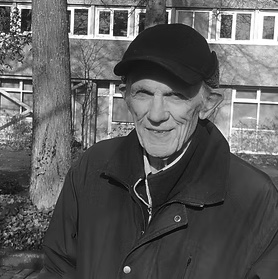
Four Reasons We Need Revival in North America
Preaching from Exodus 3, Evans traces his own hunger for revival to the 1904 Welsh revival and to Moses at the burning bush, then names four reasons North America needs it now — his own soul, his church, his country, and his Savior's worth. Reading from The Harbinger and 2 Chronicles 7:14, he urges believers not to bury their heads like ostriches but to lift their eyes, bend the knee, and seek God's face together in prayer.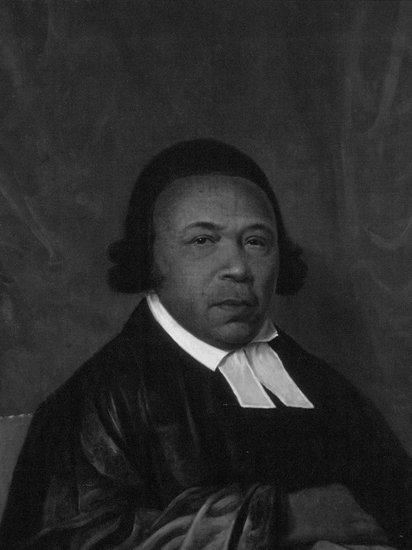
A Thanksgiving Sermon on the Abolition of the African Slave Trade
Preached in St. Thomas's African Episcopal Church, Philadelphia, on 1 January 1808, the day the American ban on the African slave trade took effect. Jones reads Israel's deliverance from Egypt as a pattern of how God deals with the oppressed: the God who saw Israel's affliction has seen the slave ships, the auction blocks and the whip, and has "come down" through the laws of Parliament and Congress. He draws five duties from the mercy, among them prayer for those still enslaved and a yearly day of thanksgiving, and ends with a prayer for Africa.Cross-references from OpenBible.info, CC BY